
Free EMR Newsletter Want to receive the latest news on EMR, Meaningful Use, ARRA and Healthcare IT sent straight to your email? Join thousands of healthcare pros who subscribe to EMR and EHR for FREE!

EMRs Help Identify High-Risk Pregnancies

A group of researchers have begun a project in which they use EMRs to identify pregnant mothers who may be at high risk for medical complications.

The researchers, who are being supported by Johns Hopkins University’s Center for Population Health IT (CPHIT), are conducting a pilot using predictive modeling and natural language processing to find indicators of possible risk in the text of records for pregnant Medicaid beneficiaries, according to an article in iHealthBeat.

Maryland, where the pilot is taking place, has had a statewide HIE in place since 2009. The HIE data is useful for spotting trends in the medical histories of individual patients, as it ensures that doctors have the whole story, but obviously, the data doesn’t analyze itself.

That’s where CPHIT comes in. Its job is to find ways to improve public health using existing sources of data.

To find high-risk moms, the researchers are working with CPHIT to find such hints such as whether the mother smokes or lives in an abusive environment. Historically, those beneficiaries don’t receive regular follow-up care, the story notes.

The team of researchers and CPHIT learned which beneficiaries should be considered a risk, in part, by taking a trip to a Johns Hopkins campus in East Baltimore, where a nurse shared warning signs for complicated pregnancies and along the way, shared different phrases which could confuse the search (such as ‘former tobacco user’ or ‘this patient is not a tobacco user’ or ‘this patient lives with a tobacco user.’)

Now armed with this information — and a difficult-to-obtain link between OB, primary care charts and insurance files — the pilot is slowly moving forward. When researchers find mothers who could be at risk for complicated pregnancy, they contact those mothers about receiving care needed to increase the odds of their having a safe, normal pregnancy and delivery.

June 7, 2013 I Written By

Anne Zieger is veteran healthcare consultant and analyst with 20 years of industry experience. Zieger formerly served as editor-in-chief of FierceHealthcare.com and her commentaries have appeared in dozens of international business publications, including Forbes, Business Week and Information Week. She has also contributed content to hundreds of healthcare and health IT organizations, including several Fortune 500 companies.

Putting Paper Charts into Perpsective

It was with a sigh of relief that the nurse at my daughters’ new pediatrician’s office handed me my youngest’s immunization records just minutes after I requested them. This was her first well visit at the new doctor’s office, and I wasn’t sure how easily everything would transfer over from her previous doctor. Thankfully, the nurse was able to pull them up within seconds via their EMR, and I was happy to see they were in a format I could easily understand. The fact that my youngest had previously seen a pediatrician within the same health system certainly helped record retrieval.

I had to jump through quite a few hoops to make sure my oldest’s were faxed from the old provider to the new provider. Consent and release forms had to be filled out and faxed. Multiple phone calls had to be made to each provider. It was just so time consuming! Oh, how I look forward to the days when health information exchange can make this process a little easier.

For all the complaining and nit picking I might do when it comes to the absence, delayed use  or misuse of electronic medical records, I (and pretty much everyone else in a first-world country) really have no reason to bellyache. This realization was driven home when I came across a recent Bill & Melinda Gates Foundation blog by Orin Levine. The title, “Records for Life: Saving Lives by Design,” made me think I was about to read an opinion piece of the importance of user experience in EMRs. The subject turned out to be much simpler, and so much more important, than my initial impression.

Levine, who provided aid in refugee camps while working for the CDC some years ago, was astounded that more than 60% of parents in the camps had their children’s paper health record with them. “What struck me was that these mothers and fathers,” he writes, “who were able to bring so little with them when they fled their homes, chose the child health record as one of the few possessions to take.”

His observation certainly puts things into perspective. How many of us would grab the folder filled with our children’s medical history, rather than the scrapbooks gathering dust in some rarely opened chest? Many of us, I’m sure, would assume these records are resting safe somewhere in the cloud, waiting to be accessed at our convenience.

Things aren’t so simple in other parts of the world, and it comes as no surprise that developing countries still rely on paper charts.

“These cards are particularly important in the developing world,” Levine explains, “where electronic health record systems are almost non-existent. Historically, these cards have been developed for national immunization programs by health care providers who have little, if any, design experience to maximize the cards’ utility.”

Perhaps the next time we watch our providers suffer through an extra mouse click, or toggle back and forth between screens, we can remind ourselves – and them – how fortunate we are to be receiving care with a roof over our heads and records at our fingertips.

—————————————————————————————————————————————————–

The Bill & Melinda Gates Foundation is launching an international contest to redesign the child health record. Guidelines for the contest are available here.

June 6, 2013 I Written By

As Social Marketing Director at Billian, Jennifer Dennard is responsible for the continuing development and implementation of the company’s social media strategies for its three key properties – Billian’s HealthDATA, Porter Research and HITR.com. She is a regular contributor to a number of healthcare blogs, and currently manages the Technology Association of Georgia Health Society’s social media channels. You can find her on Twitter @SmyrnaGirl.

Telemedicine Not Connecting With EMRs

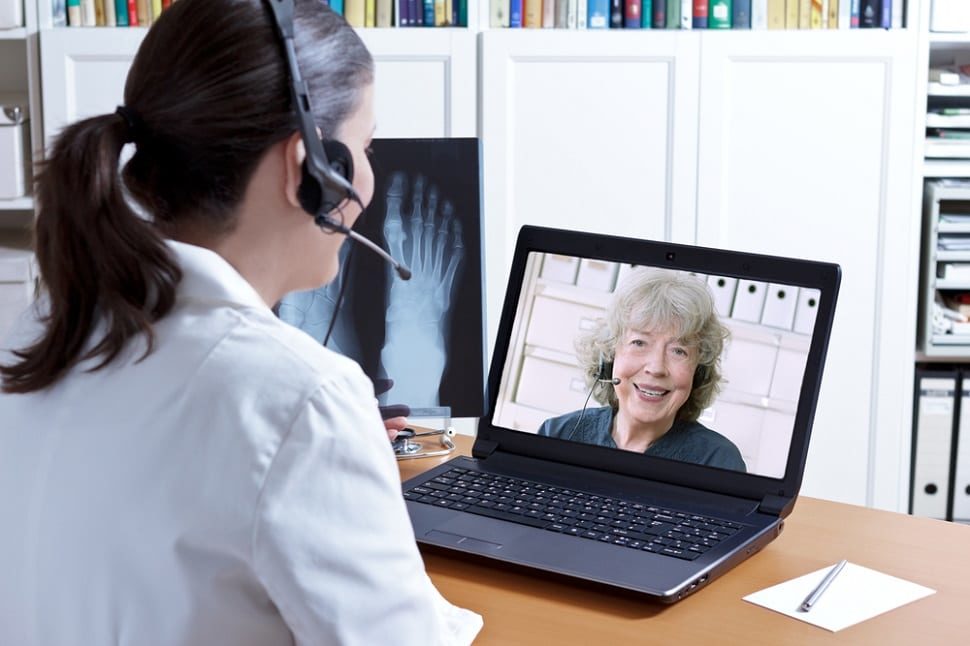
As smartphones and tablets become a standard part of healthcare as we know it, telemedicine is gaining a new foothold in medicine too.  In some cases, we’re talking off the cuff transactions in which, say, a patient e-mails a photo to a doctor who can then diagnose and prescribe.  But telemedicine is also taking root on an institutional level, with health systems rolling out projects across the country.

The problem is, however, that these telemedicine projects simply don’t integrate with EMRs, according to an article in SearchHealthIT.  The piece’s writer, Don Fluckinger, recently attended American Telemedicine Association’s 2013 Annual International Meeting & Trade Show, where complaints were rife that EMRs and telemedicine don’t interoperate.

I really liked this summary of the situation one executive shared with Fluckinger:

For now, the executive (who asked not to be named) said, telemedicine providers need to keep away from the “blast radius” of EHR vendor conflicts, lest their budgets get consumed by building interfaces to the various non-interoperable EHR systems.

Not only are health systems struggling to integrate telemedicine data with EMRs, telemedicine providers are in a bit of a difficult spot too, Fluckinger notes. As an example, he tells the tale of Seattle-based Carena Inc., a provider of primary care services to patients via phone and video, which provides after-hours support to physicians at Franciscan Health System in Tacoma, Wash.

Carena itself has an EMR which has the ability to share searchable PDF documents for use in patient EMRs, but Franciscan’s seven hospitals are bringing up an Epic implementation which can’t support this trick.  Top execs at Franciscan want to connect Carena’s data to Epic, but that won’t happen right away.  So Franciscan may end up setting up Carena’s after-hours service within Franciscan’s Epic installation to work around the interoperability problem.

This is just one sample of the interoperability obstacles healthcare organizations are encountering when they set out to create a telemedicine service. As telemedicine explodes with the use of portable devices, I can only imagine that this will impose one more pressure on vendors to conquer compatibility problems. (But sadly, I doubt it will force any real changes in the near future.)

June 5, 2013 I Written By

Anne Zieger is veteran healthcare consultant and analyst with 20 years of industry experience. Zieger formerly served as editor-in-chief of FierceHealthcare.com and her commentaries have appeared in dozens of international business publications, including Forbes, Business Week and Information Week. She has also contributed content to hundreds of healthcare and health IT organizations, including several Fortune 500 companies.

Getting Your EMR’s UI/UX RIght

A couple of weeks ago, someone posted an interesting question on the buzzing question and answer site Quora.com: Is there room for any more new EMRs in the insanely crowded marketplace we have today? According to one very sharp medical student who’s keeping an eye on the field, the best response isn’t “yes,” or “no,” but “you’ve got the wrong question.”

His answer, which I’d like to share with you, argues that there’s no point whatsoever trying to introduce a new EMR with a shiny new feature set when none of the existing field have a decent UI/UX right now. Jae Won Joh then lays out the steps he believes vendors should take if they want to get the basic UI/UX right (steps excerpted for brevity):

Step 0: Architect the patient data structure carefully
I mention this because you’re going to need to be able to pass this patient data around for clinical use, billing, research, auditing, etc, so design for flexibility and expandability from the get-go. Too many EMRs make it painfully obvious that things were thrown in as afterthoughts.

Step 1: Decide on your market…
…because you need to do everything possible to totally kill it. It’s the only way to go. If you’re going to take on group practices, great, take on group practices. If you’re going to work the hospital scene, fine, work the hospital scene. Stop trying to make something that does everything everywhere. This is not a feature, it’s a horrible bug.

Step 2: Analyze what your market does
If it’s a hospital, you need multiple classes of user, ranging all the way from student to nurse to physician to administrator. You’ll also want a competent notification system, because inpatient things tend to be more urgent and if the ICU patient’s potassium is critically high, you probably want to warn the physician immediately instead of waiting for the physician to check on it manually, because gee, the patient might code and die before that happens….The concerns are different for an outpatient scenario: you don’t need a lot of the stuff that hospitals require in an office. Less orders, more scripts, greater throughput in terms of number of patients, scheduling functionality, etc.

Step 3a: Abstract workflows to a very high level first
In other words, they are as follows: 
1) read data
2) interpret data
3) input data

There’s really not much else to it. Every workflow is a permutation of those three. For example: a physician orders a lab, and it’s performed. The result is read by the tech who provides the input to the system, where it is then read and interpreted by the physician so they can go from there. Figure out how each workflow revolves around these three abstractions.

<excerpted>

Step 3c: Design for a 5-year-old
If a five-year old couldn’t use your UI, you screwed up. Period.

There’s a lot more to Joh’s answer, and I suggest you hit Quora youself and read his entire piece. When it comes to usability, most EMRs have barely scratched the surface, and talking about these issues more is always a Good Thing.

June 4, 2013 I Written By

Anne Zieger is veteran healthcare consultant and analyst with 20 years of industry experience. Zieger formerly served as editor-in-chief of FierceHealthcare.com and her commentaries have appeared in dozens of international business publications, including Forbes, Business Week and Information Week. She has also contributed content to hundreds of healthcare and health IT organizations, including several Fortune 500 companies.

EHRs Don’t Support Key Parts of Practice

Ideally, EHRs make the clinical exams more efficient and effective, ultimately saving or even making more money for medical practices.  But the reality is that they bypass other parts of the patient encounter where much of the costs and inefficiencies are generated, according to a whitepaper by athenahealth, “The Economics of Patient Workflow: Cracking the Code of Successful EHR Design.

As the paper notes, 100 percent of practice revenue is generated by the patient exam. Other stages of managing a practice, such as orders and results management, generate 30 percent to 40 percent of costs but no revenue at all. So having an EHR in place which does little to improve exam efficiency — or actually reduces it — is a dangerous thing to do to a practice.

Worse, as the paper points out, there are some major flaws with typical, software-based EHRs:

* They’re too expensive:  Typical cost is $33,000 per physician plus $1,500 per doctor per month for maintenance.

* They don’t save money because they slow doctors down:  Most EHRs force physicians to do a lot of data entry, much in time-consuming, structured formats.

* They aren’t designed to manage the P4P cycle seamlessly:  With most EHRs, doctors have to dig out the data needed to create pay for performance reports.

* They usually don’t offer an efficient, closed-loop solution to the problem of monitoring paper and electronic orders and results:  Remember, orders and result management generates as much as 40 percent of practice expenses.  EHRs’ failure to make such tracking efficient is a major obstacle for medical practices.

Few EHRs support follow-up work from orders and results effectively:  Most EHRs don’t include built-in management and tracking of patient communications, forcing providers to do inefficient and potentially risky manual follow-up.

The white paper goes on to make the argument that there are several reasons why Web-based EHRs solve these problems, largely by requiring no up front cost, using up less physician time on data entry, optimizing collection of data for P4P programs, digitizing all paperwork and tracking practice results.

June 3, 2013 I Written By

Anne Zieger is veteran healthcare consultant and analyst with 20 years of industry experience. Zieger formerly served as editor-in-chief of FierceHealthcare.com and her commentaries have appeared in dozens of international business publications, including Forbes, Business Week and Information Week. She has also contributed content to hundreds of healthcare and health IT organizations, including several Fortune 500 companies.

Health IT and Worker Burnout — #HITsm Chat Highlights

We continue to test various methods to incorporate video into the #HITsm chats. This week a few of us got together to talk about what was said during the #HITsm chat. You can see the video embedded below. It was pretty fun to kind of wrap up what was tweeted during the #HITsm chat. Let us know what you think of the video below. We’re definitely interested in knowing if people like the videos or not. Plus, if you’re interested in participating in one, let us know as well.

Topic One: How might #healthIT CONTRIBUTE to #healthcare worker burnout (#EHR fatigue, etc.)?


Topic Two: How are #healthcare worker burnout factors tracked & measured today (or ARE they)?


Topic Three: How could/should #healthcare worker burnout factor into #healthIT design principles?


Topic Four: How could #healthIT improve the provider experience (reducing burnout risk)?

Topic Five: Should patients have access to #healthcare provider burnout factor ratings & mitigation plans?

June 1, 2013 I Written By

Katie Clark is originally from Colorado and currently lives in Utah with her husband and son. She writes primarily for Smart Phone Health Care, but contributes to several Health Care Scene blogs, including EMR Thoughts, EMR and EHR, and EMR and HIPAA. She enjoys learning about Health IT and mHealth, and finding ways to improve her own health along the way.

EMR Alert Fatigue Can Have Deadly Consequences

A case study published this week in the journal Pediatrics suggests that EMR alert fatigue is becoming a major source of potential medical errors.  According to a piece in iHealthBeat, “a deluge of repetitive, inappropriate alerts” have been generated by EMRs of late, causing clinicians to ignore or override alerts very frequently.

Problems with alerting in medication order entry systems are proving to be a particularly serious safety hazard, it seems.  ”It has been well established that clinicians override many drug allergy alerts generated by the electronic health record,” write the authors of the Pediatrics study.

The case study in Pediatrics comes from researchers at Stanford University Biomedical Informatics and Harvard Medical School.  Researchers examined the case of a two-year-old boy who died after clinical staff overrode scores of distracting EMR alerts — more than 100 over the course of one month — and ended up inappropriately administering a diuretic to the patient.

The key to addressing this  problem appears to be zeroing in on approaches to minimize the number of non-evidence based alerts that bedevil physicians during their time with patients. However, implementing these changes can be very complex.

In the PICU researchers were observing for their study, the facility made evidence-based allergy alerting alerts to the hospital’s system. However, that’s just one aspect of a multifaceted problem.  As the authors note, “incorporating clinical evidence in electronic drug allergy alerting systems remains challenging, especially in pediatric settings.”

But given that pediatric patients usually can’t themselves alert doctors or nurses when the wrong drug comes to hand, this seems like it should be a priority when looking at ways to reduce EMR alert fatigue.

May 31, 2013 I Written By

Anne Zieger is veteran healthcare consultant and analyst with 20 years of industry experience. Zieger formerly served as editor-in-chief of FierceHealthcare.com and her commentaries have appeared in dozens of international business publications, including Forbes, Business Week and Information Week. She has also contributed content to hundreds of healthcare and health IT organizations, including several Fortune 500 companies.

“Breadwinner Moms” and #HITChicks

You’ve got to wonder at the title of a new Pew Research Center survey, so aptly called “Breadwinner Moms.” It’s catchy, for sure, but at the same time carries with it a hint of guilt that so many of us working moms are all too familiar with.

The survey found that “40% of all households with children under the age of 18 include mothers who are either the sole or primary source of income for the family.” That’s up 29% in the last 53 years, which isn’t all that surprising since, as the survey found, women now make up 47% of the labor force. I hope that we’re all fairly familiar with the historical and cultural forces behind these increased percentages.

Though not surprising to me, as the majority of my female contemporaries work and have children, I do wonder what portion of women in healthcare IT – or #HITchicks, as I like to call them on Twitter – are a part of this growing group. I’d safely bet that at least 50% of the women I work with have children at home. Ladies, do you see similar statistics play out at your organizations?

While this number seems to be increasing, I think it is also causing the “mommy guilt” so many of us feel at one time or another to ease a bit. At least we have other moms to commiserate with once we get to the office. I think parents today are fortunate that many in the corporate world have embraced telecommuting and working from home. (Though with young children at home this summer, I find myself more productive working in the office. My four-year old just can’t wrap her head around the need to not bother me when my home office door is closed.)

I wonder if this survey, and the general topic of women in the workplace, will be brought up at the “Women as Leaders” session at the upcoming HFMA ANI conference in Orlando. This will be my third time attending, and I find that I enjoy it just as much as I do HIMSS.

The session description reads, “Join a lively and inspiring conversation with the women on HFMA’s Board of Directors about how women can thrive as leaders in a highly demanding environment. Although women have long held leadership positions in health care, barriers to these roles continue to exist. Learn how the women on HFMA’s Board of Directors have achieved a seat at the leadership table and made their voices heard.”

They’ll “identify core skills women need for leadership success, such as self-confidence, team management, and negotiation; help women new to leadership roles excel and embrace the challenges they face; and share success stories for managing careers, families and communities.”

It’s the “families” part I’m most interested in hearing about. Though I love my career so much that I don’t see myself ever totally give it up, I’ve realized the term has to be fluid – changing in shape and definition to meet the needs of my family, which at the end of the day trumps career – and being the breadwinner – every time.

May 30, 2013 I Written By

As Social Marketing Director at Billian, Jennifer Dennard is responsible for the continuing development and implementation of the company’s social media strategies for its three key properties – Billian’s HealthDATA, Porter Research and HITR.com. She is a regular contributor to a number of healthcare blogs, and currently manages the Technology Association of Georgia Health Society’s social media channels. You can find her on Twitter @SmyrnaGirl.

Practice Fusion Announces 3 Billing Partners

With the news of Mitochon shutting down their Free EHR business, that really only leaves a couple players left in the Free EHR space. The largest one is Practice Fusion, but it has challenges of its own. You might remember the announcement that Kareo bought the Epocrates EHR and is offering the EHR for free.

You could tell that Practice Fusion was put in a bad position when Kareo decided to basically part ways and offer a competitive product to Practice Fusion. Although, no doubt Practice Fusion and Kareo both knew it was going to happen sooner or later. The key question was how Practice Fusion was going to respond to the move by Kareo since Practice Fusion was sorely lacking in the billing department.

Well, the answer is now in. Practice Fusion just announced 3 preferred billing partners: NueMD, CollaborateMD and ADP AdvancedMD. You can see NueMD’s press release about the partnership here. Both NueMD and CollaborateMD are offering their billing solution starting at $149/month. ADP AdvancedMD offers “customized pricing” which means they don’t want to commit to a price and likely change the price based on the size of the practice.

The Practice Fusion announcement I got did say that these integrations will happen “later this summer.”

It’s an interesting choice on Practice Fusion’s part to continue down the integration road versus developing their own billing software or just buying one of the billing software that’s out there. I wonder if this is going to pose a long term problem for them. I wonder if Practice Fusion learned from the Kareo experience and the contracts with NueMD, CollaborateMD, and ADP AdvancedMD take this into account.

No doubt Practice Fusion comes at the EHR world with a different business model in mind, but it could be a mistake for them to not also have a hand in the purse strings (billing). Sure, they’ll get some short term financial bump from these three partnerships, but are they trading revenue for long term connections with the doctors?

May 29, 2013 I Written By

John Lynn is the Founder of the HealthcareScene.com blog network which currently consists of 15 blogs containing almost 5000 articles with John having written over 2000 of the articles himself. These EMR and Healthcare IT related articles have been viewed over 9.3 million times. John also recently launched two new companies: InfluentialNetworks.com and Physia.com, and is an advisor to docBeat. John is highly involved in social media, and in addition to his blogs can also be found on Twitter: @techguy and @ehrandhit and Google Plus.

eHealth Pilot Helps Chronically Ill

An 18-month pilot in one of Rio de Janeiro has demonstrated that even a small amount of health IT tools, applied to the right population, can have a significant effect on targeted patients’ health.

To conduct the pilot, the New Cities Foundation and GE Healthcare set out to test out a model which would improve access to primary care in a poor urban community, reports PMLive. (Note: The New Cities Foundation was established by GE, Cisco and Ericsson.)

The partners gave a clinic in the Santa Marta favela in Rio a GE-created eHealth kit, capable of fitting in a backpack, which contained a set of tools to measure key health indicators.  The materials in the kit, if purchased by outside parties, would usually cost about $42,000.

Clinic staff used the portable set of tools to visit 100 elderly patients living with chronic illness and mobility issues, in an effort to offer these patients a comprehensive diagnosis, the publication said.

According to a report created on the project by the Foundation, the results were substantial. Cost savings due to avoiding adverse clinical events included $4,000 (heart failure) to $200,000 (kidney failure) per 100 elderly patients.  Meanwhile, the pilot saved $136,000 per 1,000 patients by avoiding hospitalizations of those with cardiovascular diseases.

Time and time again, research shows that proactively providing preventive care takes costs out of the health system. This model, which seems like it could be duplicated easily in the U.S., should be tested widely in urban “health deserts” here. Any approach which brings primary care to where the frail, immobile elderly are seems almost guaranteed to be a winner.

May 28, 2013 I Written By

Anne Zieger is veteran healthcare consultant and analyst with 20 years of industry experience. Zieger formerly served as editor-in-chief of FierceHealthcare.com and her commentaries have appeared in dozens of international business publications, including Forbes, Business Week and Information Week. She has also contributed content to hundreds of healthcare and health IT organizations, including several Fortune 500 companies.